

The real estate business is one of the most powerful and influential industries in the world. It not only provides people with homes and workplaces but also drives economic growth, creates employment, and serves as a foundation for investment and wealth-building. Whether you are a student curious about careers, an investor looking for opportunities, or an entrepreneur planning to enter the industry, understanding the real estate business is essential.
In this article, we will explore what real estate business means, its types, how it works, benefits, challenges, and its future potential.
Understanding Real Estate Business
At its core, the real estate business involves activities related to buying, selling, renting, and managing properties. These properties can be residential houses, commercial offices, industrial warehouses, or even land.
Unlike many other businesses, real estate deals with tangible assets—physical properties that can be seen, touched, and utilized. The main objective is to generate income, either through rental earnings, property appreciation, or commissions earned by facilitating property transactions.
For example, a real estate agent earns by connecting a buyer and seller, while a property investor profits when the value of land or buildings increases over time.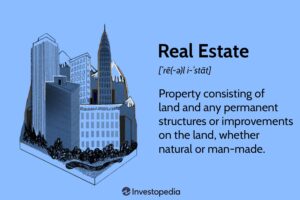
Types of Real Estate
The real estate business is diverse and can be divided into four major categories:
1. Residential Real Estate
This includes houses, apartments, villas, and flats. It is the most common segment since housing is a basic human need. People buy homes for living or as long-term investments. Agents and brokers often specialize in helping clients buy, sell, or rent residential properties.
2. Commercial Real Estate
Commercial properties are those used for business purposes, such as shopping malls, office buildings, hotels, and restaurants. The rental income from commercial real estate is generally higher than residential, making it attractive for investors.
3. Industrial Real Estate
This includes factories, warehouses, and manufacturing units. Industrial properties are essential for production and distribution businesses. With the boom in e-commerce, warehouses and logistics centers have become highly valuable assets.
4. Land and Agricultural Real Estate
Undeveloped land, farms, and agricultural plots also fall under real estate. Investors often purchase land in growing areas, expecting its value to rise when development occurs.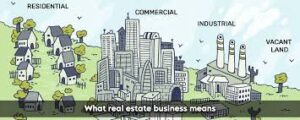
How Does the Real Estate Business Work?
The real estate business operates on the principle of supply and demand. People are always in need of housing and workspaces, while investors and developers are always searching for profitable opportunities.
The process generally involves:
-
Property Development – Builders and developers construct residential or commercial projects.
-
Property Sales – Real estate agents and companies connect buyers with sellers.
-
Property Rental/Leasing – Owners rent out properties for steady monthly income.
-
Property Management – Agencies manage properties, collect rent, and maintain buildings for owners.
-
Real Estate Investment – Investors purchase properties with the goal of long-term appreciation or rental
 returns.
Benefits of Real Estate Business
The real estate industry offers several advantages for entrepreneurs and investors:
-
Wealth Creation: Real estate properties appreciate in value over time, creating long-term financial security.
-
Stable Demand: Housing and business spaces will always be in demand, making real estate a reliable sector.
-
Multiple Income Streams: Profits can come from buying, selling, renting, and even managing properties.
-
Career Opportunities: From being a broker to becoming a property developer, career paths are diverse.
-
Tangible Asset: Unlike stocks or crypto, real estate is a physical asset that provides security.

Challenges in Real Estate Business
While profitable, real estate is not without its risks and challenges:
-
High Initial Investment: Purchasing properties or starting an agency requires significant capital.
-
Market Fluctuations: Economic downturns, inflation, or policy changes can affect property demand and prices.
-
Legal Complications: Property disputes, unclear ownership, or complex documentation can delay deals.
-
Competition: With so many agents and companies, standing out requires branding and networking.
-
Time-Consuming: Finding the right buyer or tenant often takes months, requiring patience and persistence.
Careers in Real Estate
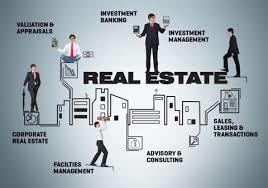
The real estate business is not limited to just buying and selling. It offers multiple career opportunities, such as:
-
Real Estate Agent/Broker – Helps clients buy, sell, or rent properties and earns commissions.
-
Real Estate Developer – Plans and builds residential or commercial projects.
-
Property Manager – Manages rental properties for owners.
-
Real Estate Investor – Buys and sells properties for profit or long-term gains.
-
Real Estate Consultant – Provides professional advice on property investments and market trends.

The Future of Real Estate
The real estate industry is evolving rapidly with technology and changing lifestyles. Some key trends shaping its future include:
-
Smart Homes and Green Buildings – Eco-friendly, energy-efficient homes are becoming more popular.
-
PropTech (Property Technology) – Virtual tours, AI-driven platforms, and online property marketplaces are revolutionizing the sector.
-
Affordable Housing – Governments and developers are focusing on affordable homes to meet urban demand.
-
Work-from-Home Impact – The rise of remote work is changing demand for office spaces.
-
Global Investments – International investors are increasingly exploring emerging markets like India and Southeast Asia.
Conclusion
So, what is real estate business? It is the art and science of dealing with properties—buying, selling, renting, and managing them for profit and growth. It is one of the oldest yet most promising industries, offering stability, wealth creation, and countless career opportunities.
While the business comes with challenges such as market fluctuations and legal hurdles, its benefits—like long-term appreciation, steady demand, and multiple income sources—make it an attractive option for both individuals and companies.
As cities expand and technology reshapes the way we live, the real estate business will continue to evolve, providing endless opportunities for those ready to learn, adapt, and invest wisely.
If you are considering entering the real estate industry, now is the best time to begin—because real estate is not just about properties, it’s about building the future.
